
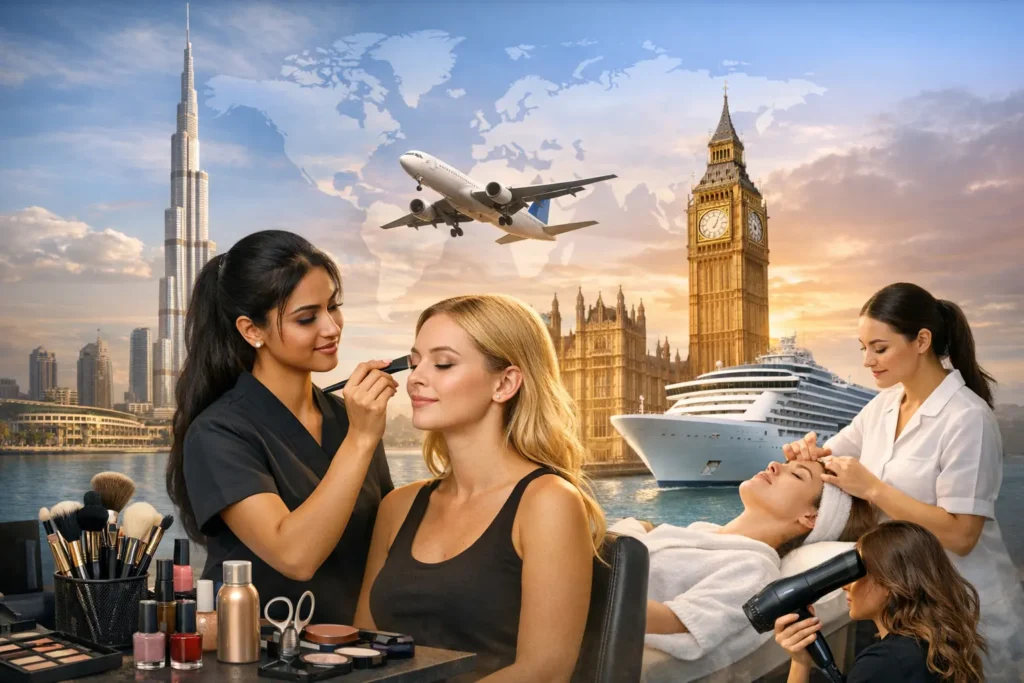
Have you ever thought about working in Dubai, the UK, or even on a cruise ship as a beauty professional?
For many people, this idea feels exciting – and also a little confusing. The beauty industry is growing quickly around the world. Skilled beauticians, makeup artists, and cosmetologists are needed in many countries. Beauty is no longer limited to your hometown. If you have the right skills, you can build a career almost anywhere.
If working abroad is your goal, proper training becomes very important. A well-structured program like an international diploma in cosmetology can open doors to salons, cruise lines, fashion events, and even your own studio. The right training does not just teach techniques — it prepares you for real work situations.
What Is an International Diploma in Cosmetology?
An international diploma in cosmetology is more than a basic beauty course. It is a professional qualification created for people who want to work at a higher level, often outside their home country.
Instead of learning only simple services, you study skin care, hair science, makeup techniques, hygiene practices, and client handling in detail. The program usually combines classroom learning with practical sessions. This means you actually perform treatments under guidance instead of just watching demonstrations.
What Does It Usually Include?
Most international diploma programs cover:
- Skin treatments and advanced facial procedures
- Hair cutting, styling, and chemical services
- Professional makeup application
- Hygiene and safety rules
- Client consultation techniques
- Basic salon operations and management
The idea is simple: you should be comfortable handling real clients when you finish the course.
Why Is It Called “International”?
It is called “international” because the training follows standards that are accepted in many countries. The curriculum is designed to match global service expectations.
The certification is recognised in multiple regions, which helps when you apply for jobs abroad. Employers often look for candidates who have completed structured programs, as it shows proper training and discipline.
Who Should Choose This Diploma?
This type of diploma is suitable for:
- Students who want to build a career abroad
- Beauticians who want to upgrade their qualification
- People switching careers into the beauty field
- Anyone who prefers professional training instead of informal learning
If your aim is to work in a salon, luxury hotel, cruise ship, or even open your own studio overseas, this diploma can give you a strong starting point.
Why the Beauty Industry Is a Global Opportunity
The beauty industry offers opportunities that cross international borders and span many different career paths, encompassing everything from hands-on creative work and innovation to sales, training, and leadership roles within the business side of the field.
Many countries are investing in wellness, skincare, and personal grooming services. This growth has left the door wide open for trained professionals in different areas.
The AskAttest report highlights that the worldwide beauty and cosmetics market expanded steadily from 2024 to 2025, reflecting a clear upward trend in overall industry value during that time.
With the proper training and expertise, professionals in the beauty industry can pursue career opportunities internationally, as the field offers strong global demand and diverse pathways for growth across different markets.
Growing Demand in International Markets
The beauty industry abroad is expanding every year. Countries in the Middle East, Europe, Australia, and Asia are hiring trained professionals.
Here are some cosmetology career opportunities overseas:
- International salons and spa chains
- Luxury hotels and wellness centers
- Cruise lines
- Fashion and bridal industries
- Skincare clinics
Many employers look for trained professionals who understand international standards. With the appropriate qualifications, you can pursue opportunities with confidence and present yourself as a strong candidate in the field.
What International Employers Look For
Employers abroad do not hire based on passion alone. They look for:
- Certified training from a recognised institute
- Practical experience
- Clean work habits and hygiene standards
- Good communication skills
- Globally recognised qualifications
Without systematic training, it becomes hard to meet these expectations. That is why joining a proper academy matters.
Many international employers prefer candidates trained under globally recognised standards such as CIDESCO. In Kerala, institutions like Glam International Academy follow such structured frameworks to align students with international service expectations.
How Structured Training Builds a Global-Ready Professional
Having passion is important, but global employers look for proven skills. For example, a salon in Dubai or a spa in the UK will test your knowledge of hygiene rules, skin analysis, and treatment procedures before hiring you. Informal learning is usually not enough for these standards.
A structured program trains you step by step, with proper tools, supervised practice, and real client simulations. This type of education prepares you for real workplace expectations, not just classroom learning.
Technical Mastery Through Professional Education
A professional beauty academy gives you strong technical knowledge in:
- Skin care basics
- Hair science
- Makeup techniques
- Advanced skincare treatments
- Professional hair and makeup skills
You learn theory and practice together. This builds confidence. You do not just watch – you perform treatments under supervision.
When training follows global norms, your skills match international expectations.
Beyond Skills – Industry-Ready Competencies
Technical skills alone are not enough in international workplaces.
For example, a client in a luxury hotel spa may expect clear consultation, proper product explanation, and polite communication. Formal training teaches you how to handle clients professionally, manage appointments, follow service protocols, and maintain hygiene records.
You also learn basic salon operations, such as pricing, inventory handling, and customer service standards. These competencies make you ready to work in structured international environments.
The Importance of an Internationally Recognised Qualification
When you plan to work abroad, your certificate becomes very important. Employers check where you studied and what type of training you completed. A recognised qualification makes your profile stronger and more trustworthy.
It also shows that you follow accepted professional standards. Here, we explain why global certification supports your international career goals.
Why Certification Matters for Working Abroad
When you apply for jobs overseas, employers check:
- Your qualification
- Accreditation
- Course structure
- Training hours
For some countries, proper certification also supports licensing and visa processes. A recognised certificate gives credibility and improves your job chances.
International employers often value globally recognised certifications such as CIDESCO, as these programs follow structured global standards.
How an International Diploma Strengthens Career Mobility
An international diploma in cosmetology helps your qualification get accepted in different countries. This type of diploma:
- Follows global curriculum standards
- Includes structured practical training
- Builds professional discipline
- Makes your credentials portable
When your certification is globally recognised, you can move between countries with more confidence.
If you want to grow further, you can also learn more about comprehensive diploma options or view advanced training pathways that prepare you for specialised roles.
Career Pathways After Completing Professional Beauty Training
Students often wonder about their next steps once their course is finished. There are several global career paths available.
After completing professional training, your options expand beyond local salons.
For example, trained cosmetologists can apply to spa chains in the Middle East, wellness resorts in Europe, or cruise ship beauty departments.
Some professionals specialise in bridal makeup, while others focus on skincare therapy or hair services. Your specialization and certification level decide which roles you qualify for. Having the right certifications allows you to pursue opportunities that match your interests and earning expectations.
Working in International Salons and Spas
With the right training, you can work as:
- Cosmetologist
- Makeup artist
- Skincare specialist
- Hair stylist
Many professionals from India and Kerala now work in Dubai, Qatar, the UK, and Australia after completing recognised beauty programs.
Cruise Lines, Fashion & Luxury Hospitality
Cruise ships hire beauty professionals to serve international guests. Luxury hotels also need trained staff for spa and wellness services.
In the fashion and bridal industries, skilled makeup artists travel for events and shows.
These roles give:
- International exposure
- Higher salary potential
- Experience with global clients
Starting Your Own Studio Abroad
Some professionals choose entrepreneurship.
After completing a beauty course with certification and gaining experience, you can start your own studio or salon abroad.
Knowledge of salon management training helps you handle:
- Staff
- Clients
- Pricing
- Hygiene standards
A globally recognised beauty qualification adds trust to your brand.
Choosing the Right Beautician Academy for Global Success
Selecting the right training institute is an important decision. Your academy shapes your knowledge, skills, and confidence. A well-structured learning environment gives you better career support. It also helps you understand international expectations clearly.
Here’s what to look for before joining a program.
Key Factors to Consider
Before joining a beautician academy, check:
- Is the certification internationally recognised?
- How many practical training hours are provided?
- Does the academy follow global hygiene standards?
- Do they provide career guidance?
An academy that focuses on real skills and industry exposure gives better results.
How the Right Training Environment Makes a Difference
A good training environment builds more than skills. It builds confidence.
You benefit from:
- Expert mentorship
- Portfolio development
- Live practice sessions
- Interview preparation support
When trainers guide you step by step, your confidence grows. This makes you ready to work anywhere in the world.
Structured academies often provide career guidance and industry connections that help students secure roles in countries like UAE, Qatar, and the UK.
Turning Your Passion Into a Global Beauty Career
If you love beauty and want financial independence, you do not have to limit your dreams to one city.
With proper training and an international diploma in cosmetology, you can build a stable career abroad. Structured education, recognised certification, and practical exposure make a big difference.
You may be a beginner, a career switcher, or an existing beautician looking to upgrade. The right academy can guide you from learning to earning.
If you are serious about working internationally, now is the time to take the first step. Request course details, speak with a counselor at a professional beauty academy and plan your journey carefully.
Your dream career in the global beauty industry can begin with the right education.
FAQs
1. Can I work abroad after completing an international diploma in cosmetology?
Yes, you can work abroad if your diploma is recognised and meets international standards. Many countries hire trained cosmetologists for salons, spas, hotels, and cruise ships. However, some countries may also require licensing or local registration. Having a globally recognised certification improves your chances of getting hired.
2. What is the difference between a regular beauty course and an international diploma in cosmetology?
A regular beauty course may focus only on basic skills. An international diploma in cosmetology follows a structured curriculum with theory, practical training, hygiene standards, and professional conduct. It prepares students for global service standards and overseas work environments. The certification is also more widely accepted by international employers.
3. Is certification important for getting a beauty job overseas?
Yes, certification is very important. Employers abroad check your training background before hiring. A recognised certificate shows that you completed formal education and practical training. It also helps during visa processing and licensing in some countries.
4. How long does it take to complete an international diploma in cosmetology?
The duration depends on the academy and course structure. Most diploma programs take several months to one year. The course usually includes both classroom learning and hands-on practical sessions. A longer program often provides more in-depth training and better skill development.
5. Which countries offer good opportunities for beauticians?
Many countries offer strong opportunities for trained professionals. Popular destinations include the UAE, Qatar, the UK, Australia, and parts of Europe. Luxury hotels, spa chains, and cruise lines regularly hire skilled cosmetologists. Demand is especially high in countries with growing wellness and tourism sectors.
6. Do I need experience before joining a professional beauty academy?
No, beginners can join most diploma programs. Professional academies start with fundamentals and gradually move to advanced techniques. If you already have experience, accurate training helps you upgrade your skills and gain recognised certification.
7. Can I start my own salon abroad after completing a beauty diploma?
Yes, many professionals open their own salons after gaining experience. An internationally accepted beauty qualification builds trust with clients. However, you must follow local business rules and licensing requirements in that country.
8. What skills are important for an international beauty career?
Apart from technical skills, employers look for communication skills, hygiene practices, professionalism, and customer service. Confidence and proper client consultation skills also matter. Organized training helps develop both technical and soft skills.
9. Does a professional beauty academy provide placement support?
Many structured academies offer career guidance, interview preparation, and industry connections. While job placement cannot always be guaranteed, career support increases your chances of finding international opportunities.
10. Is the beauty industry a stable career choice in 2026?
Yes, the beauty industry continues to grow globally. Demand for skincare, hair services, and wellness treatments is increasing in 2026. With proper training and certification, it can be a stable and rewarding career path.